
Randolph County Criminal Docket Searches
Open Search ARCourts and enter the case number if you have it. The public search also works by participant name, county, court, case type, status, and filing or event date, using whatever filters the screen offers. Pick Randolph County. Then separate Circuit Court from District Court, because a wrong court filter can bury a live case. The charging paper itself is your best routing clue. Circuit Court holds felonies and general-jurisdiction criminal cases. District Court takes misdemeanors, traffic, and violations within its limited jurisdiction. Follow this search sequence:
- Enter the exact case number, or use the public participant fields if no number is known.
- Add Randolph County and the likely court. Keep a broad search first if the court is uncertain.
- Compare the case number, court, filing date, description, and status before choosing a result.
- Read the charge block and chronological events, then review the latest setting and disposition.
- Call the Circuit Clerk or District Court Clerk when the case, document image, or setting is missing.
The exact field workflow is also covered in the Randolph County Docket Search resource.
Randolph Criminal Search Technology
Arkansas splits public case research from electronic filing. Search ARCourts is the public layer anyone can use. Arkansas eFlex is the filer's workspace. It is open to authorized users in enabled courts under the electronic-filing rules. Note that a filed item can show up as a docket entry. There may be no downloadable image behind it. The Arkansas Judiciary technology-services source explains how that statewide court-information infrastructure fits together.
The statewide tools can find your Randolph County case, yet the actual file still belongs to the clerk of the court that heard it. Search ARCourts also posts a Safari pop-up notice, so if a document window will not open, follow the official browser guidance before assuming the image is gone. After that, ask the clerk directly whether the document is public and how to get a plain or certified copy.
Criminal Dockets: What They Show
A Randolph County criminal docket opens with court and case identifiers, then lines up public events in time order. What you can see varies with the case, its age, access limits, and data migration. No single field settles the outcome.
| Header | Case number, court or location, filing date, case type, description, and status. |
|---|---|
| Parties | The State and defendant, with counsel when entered and public. |
| Charges | Offense text, statutory reference, classification, dates, and charge-level status where reported. |
| Events | Appearances, filings, motions, orders, hearings, plea, trial, disposition, and sentencing. |
| Bond and Money | Bond type or amount, assessments, payments, and balances when the court system supplies them. |
| Documents | Links can be absent, restricted, or affected by browser settings even when the entry is public. |
Take each charge on its own. One count can drop out while another heads to a plea or verdict. Keep in mind that a charge is only an allegation, and a case status never substitutes for the signed order.
Randolph Criminal Docket Results
The charge block shows what was filed, nothing more. It does not prove guilt. Weigh the charge description against the later plea, finding, dismissal, and sentencing entries. With multiple counts, match every count to its own status. A brief portal label may leave out the full terms of a court order.
- Dismissed
- A charge or case ended without a conviction on that item; the reason and scope still matter.
- Acquitted or not guilty
- The fact-finder did not enter a guilty result on the charge.
- Plea-based result
- The docket may record a plea and later sentencing or disposition steps.
- Nolle prosequi
- A prosecution dismissal term that should be read with the exact court entry.
- Disposed
- A status showing resolution activity, although later review, appeal, revocation, or correction may follow.
Does the plea clash with the disposition? Look at the later entries and order the signed document from the Randolph County Circuit Clerk.
Criminal Case Stages on the Docket
A court docket starts when a charging paper or criminal case reaches the clerk. Arrest-related activity can happen before any court file exists. From there, the docket grows into a dated account of charging, appearances, bond, motions, settings, resolution, and whatever follows.
Docket flow: Filing → Arraignment → Pretrial → Plea or Trial → Disposition → Sentencing
Activity does not stop at the disposition line. Later entries may show amended orders, revocation petitions, compliance reviews, sealing steps, or a notice of appeal. The newest valid order always controls over an older notation, so scan the full docket before drawing conclusions about where a case stands now.
Randolph Drug-Court Docket Entries
The Third Judicial Circuit administrative plan assigns drug-court responsibility affecting Randolph County to a Circuit division. A participant stays tied to an underlying criminal case number. The public chronology may show review settings, sanctions, orders, graduation, termination, or a later disposition. Treatment details can stay confidential even when the criminal docket is public. Search ARCourts is not a treatment-program database. Start with the underlying criminal case. Call the Circuit Clerk. Check the official Arkansas specialty-courts page for the statewide program framework. Randolph County posts no separate public drug-court portal.
Randolph County Criminal Docket Courts
Randolph County Circuit Court is the general-jurisdiction criminal court here. Its elected Circuit Clerk keeps those files at 107 West Broadway in Pocahontas. The office is reachable at 870-892-5522. For misdemeanors, traffic, and violations, Randolph County District Court applies within its authority. That court's Pocahontas clerk sits at 1510 Pace Road and answers at 870-892-4033.
| Case route | Custodian | Public access |
|---|---|---|
| Felony or general criminal | Randolph County Circuit Clerk | Search ARCourts, phone, counter, mail, fax inquiry |
| Misdemeanor or violation | Randolph County District Court Clerk | Search ARCourts when indexed, phone, counter, written request |
| City-issued lower matter | Named District Court department | Follow the citation or court paper |
Confirm current contacts through the official District Court directory and the Circuit Clerk directory.
Randolph Criminal Docket Orders
A browser printout is informational only; it is not a clerk-certified record. When you need an authoritative order, write down the exact case number and docket-entry date. Then contact the Randolph County Circuit Clerk and ask for the named sentencing order. Say whether you want a plain or certified copy. Ask about the current fee, payment method, delivery option, and turnaround before sending money. Randolph County publishes no criminal copy-fee sheet or request form. Get the clerk's quoted charge and accepted payment first. For older files, ask whether the record is paper, scanned, microfilmed, archived, or stored offsite. A District Court disposition goes through that court's clerk instead.
Randolph Criminal Appeals Layer
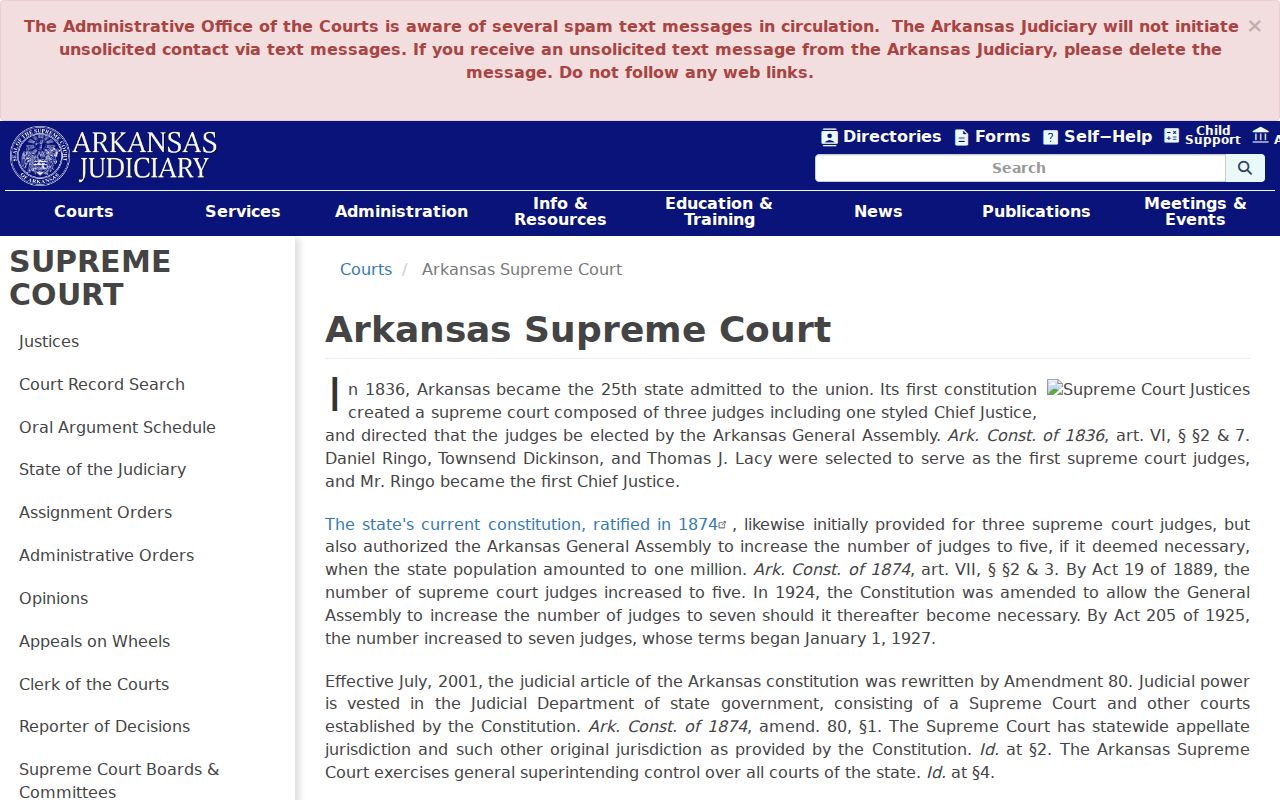
Watch the tail end of a Randolph County criminal docket for appeal activity. Entries may note a notice of appeal or steps to transmit the record. Appellate work then moves to the Arkansas Supreme Court overview or the Arkansas Court of Appeals, depending on jurisdiction. None of that erases the trial court's file. The Randolph County trial clerk keeps the local case. The appellate court runs its own separate docket. That page lays out the state's highest court. It also shows how that court fits above the county level.
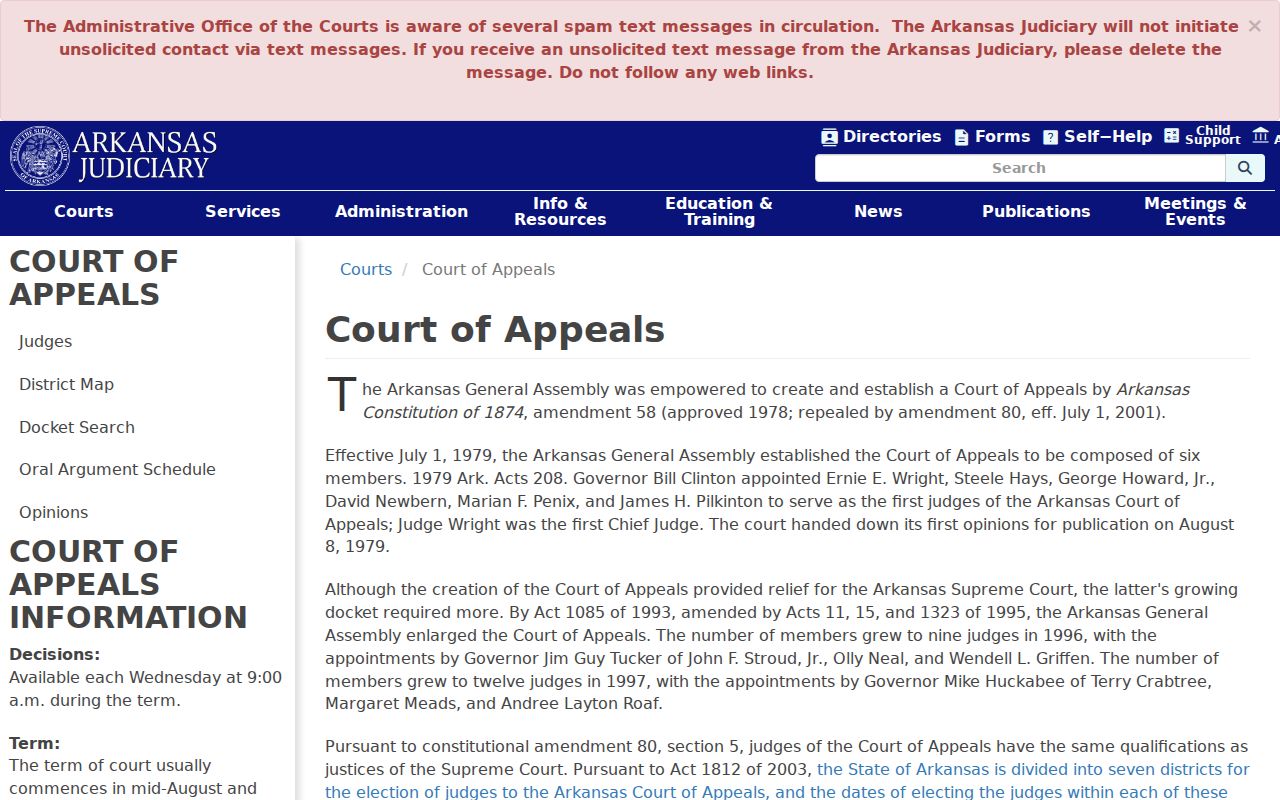
The appeal may instead land one step below the Supreme Court. The Arkansas Court of Appeals overview explains that intermediate appellate layer. Reading it alongside the county docket helps you tell a trial record from a later appellate case.
A full case history can live in two places. The Randolph County docket holds the trial, and the appellate court holds the review. Pull both when the story matters.
Access Rules for Criminal Dockets
Arkansas Supreme Court Administrative Order No. 19 sets the rules for public access to court records. Its limits surprise people. A docket entry can stay public. A document attached to it may stay closed. Remote viewing is often narrower than what you can read at the courthouse. The clerk cannot hand over a sealed paper just because the case itself is public.
Juvenile matters and sealed criminal records may be missing or blocked. Protected identifiers and court-ordered limits can hide other items. A suppressed search result does not prove the case never existed. The Arkansas Comprehensive Criminal Record Sealing Act sits in the official Arkansas Code. Order No. 19 remains the framework governing access to the record itself.
Access chain: Search ARCourts → correct Randolph County clerk → named document request → applicable review or court process if access is restricted.
Your options run wide. There is the statewide docket search, the Circuit Clerk by phone, counter, mail, or a confirmed fax process, the District Court Clerk for lower criminal matters, a courthouse terminal if the clerk confirms one, and staff archive help for older files. Ask the clerk about copy fees before you order.
Put the request in writing. Name the court, the full case number, the public case style, and the exact document or docket entry you want. Add the entry date if you know it, say whether you want a plain or certified copy, and give a return address plus a contact number for a fee quote. Confirm payment and delivery methods before mailing any funds. For an old case, ask the Randolph County clerk. Ask them to check legacy court labels and paper indexes. If something is off limits, ask whether it is simply unavailable, nonpublic, or tied up in a court-order process.